


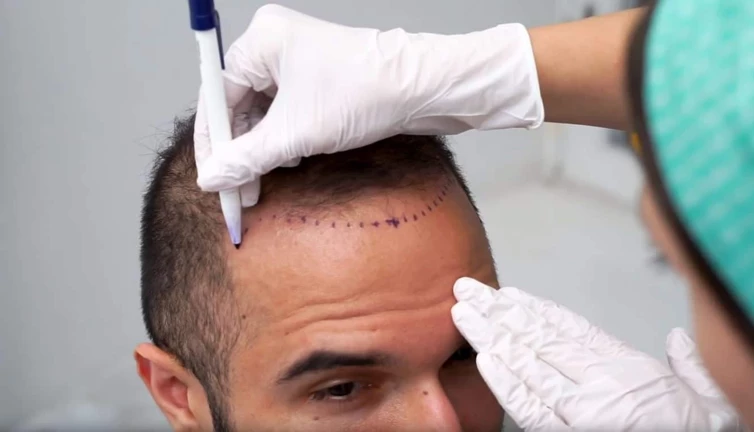
If you’re asking what is the best age for a hair transplant, you’re already thinking like someone who wants a long-term, natural-looking result—not a quick fix. The phrase best age for a hair transplant gets searched so often because people want certainty: a single “right” number that guarantees the smartest timing. In reality, age matters, but it’s rarely the deciding factor on its own. What matters most is whether your hair loss pattern has stabilized enough to plan responsibly and whether your donor area can support both today’s goals and tomorrow’s needs.
The most accurate answer is more nuanced than “in your 30s” or “after 25.” The best age for a hair transplant is usually the point when your pattern is clearer, expectations are realistic, and the plan can be designed to age well. That point arrives at different times for different people, which is why reputable clinics focus on candidacy and strategy—not just birthdays.
Why Age Matters In Hair Restoration Planning
Age is not a moral qualification for surgery, but it is a practical proxy for a few important variables: pattern predictability, long-term aesthetic harmony, and donor preservation.
Pattern predictability is the biggest reason surgeons care about age. Many people in their late teens and early 20s haven’t “declared” their final pattern of hair loss yet. A hairline that seems appropriate at 22 can look unusually low or mismatched at 35 if recession continues behind it. That’s not necessarily because the transplant “failed,” but because the surrounding native hair changed. Planning becomes easier when your trajectory is clearer.
Aesthetic harmony changes with time. Faces age, hairstyles evolve, and what looks natural at 28 may not look as natural at 48 if the hairline is overly aggressive. Age-appropriate design is less about looking older and more about maintaining a believable frame for the face over decades.
Donor preservation is the third reason age matters. Donor hair is finite. A transplant uses that resource. If a clinic spends too much donor supply early to achieve very high density or a very low hairline, you may have fewer options later if you thin further. A long-term approach treats donor hair like a budget, not a blank check.
This is why the “best age” question is really a “best timing and best plan” question—because timing and planning are inseparable in hair restoration.
The Typical Age Ranges And What Changes In Each
Instead of treating age as a pass/fail rule, it helps to understand how the decision tends to shift across common life stages. These are general patterns, not promises—and individual cases can differ.
Under 25:
This is the age range where caution is most common, primarily because the long-term pattern can still be uncertain. Some people experience early, stable recession and remain relatively unchanged for years. Others continue to progress. The risk of acting too early is designing for a present moment that doesn’t represent your future. In this group, conservative planning and thorough evaluation are especially important, and many clinicians prioritize stabilization strategies and monitoring before committing donor resources.
25 To 30:
For many patients, this is when the hair loss story becomes clearer. Recession may stabilize enough to design a mature hairline that still looks natural later. If thinning is mild to moderate and donor quality is strong, a carefully planned procedure can be reasonable. The key is restraint: focusing on a natural frame and avoiding designs that assume no further loss will occur.
30 To 40:
This range is often described as a practical “sweet spot” because patterns may be more established and expectations tend to be more realistic. Many patients have a clearer sense of how their hair loss behaves, what hairstyles they prefer, and how much change they actually want. Planning can be more decisive, and long-term balance—hairline plus mid-scalp strategy—often becomes the focus.
40 To 50:
Patients in this range often value naturalness and low-maintenance styling over maximum density. Patterns may be stable enough that the plan can be built with a high degree of realism. Donor management still matters, but decision-making can be simpler because the future trajectory may be easier to estimate.
50 And Beyond:
Hair transplantation can still be appropriate later in life if health status supports it and goals are aligned with what the donor can provide. Many patients in this stage prioritize improving frontal framing and a tidy, natural look rather than chasing youthful density. The conversation often centers on comfort, recovery expectations, and how the result will integrate with natural aging and grey hair changes.
Across all age ranges, one principle remains consistent: the best outcomes usually come from conservative design, careful donor planning, and a clear understanding that hair loss can be progressive.
Signs You May Be Ready Regardless Of Age
Because age is only one piece of the puzzle, the most useful way to decide timing is to look for readiness signals that apply at any age. A strong consultation should help you evaluate these objectively.
Here are the most common signs that you may be in a good position to consider a procedure:
- Your Pattern Appears Relatively Stable: Hair loss is not rapidly accelerating, and the likely “shape” of future loss can be discussed with some confidence.
- You Have Clear, Realistic Goals: You want a natural improvement (especially in framing) rather than a guaranteed, ultra-dense transformation everywhere.
- Your Donor Area Supports The Plan: Donor density and quality are sufficient, and the proposed harvesting strategy prioritizes preservation.
- The Hairline Design Is Conservative And Age-Appropriate: The plan avoids a too-low or overly straight hairline that may look unnatural later.
- You Understand The Timeline: You’re comfortable with gradual progress over months and recognize that early phases can look uneven during healing and regrowth.
- You Can Commit To Aftercare And Follow-Up: You’re prepared to follow post-op guidance and maintain communication during the recovery timeline.
If a clinic rushes past these points or treats them as irrelevant, that’s a reason to slow down. Timing is not just about when you can book a date; it’s about whether the plan can remain believable long after the excitement of the first year fades.
How Surgeons Plan For Future Hair Loss
The best hair transplants are planned like architecture: the foundation matters as much as the visible surface. To make a result look natural for years, clinicians typically focus on three strategic areas: hairline design, density distribution, and donor conservation.
Hairline design is often the most visually important decision. A natural hairline is rarely a perfect straight line. It usually includes micro-irregularities, soft transitions at the front, and temple work that matches your facial structure. A conservative hairline can be particularly valuable for younger patients, because it reduces the risk of the hairline looking “out of place” if recession continues.
Density distribution is another long-term lever. Many patients assume that “more grafts” automatically means “better,” but coverage is about smart placement. The frontal third has the greatest impact on how the face is framed, so many plans prioritize this region and blend density backward in a way that looks coherent. The crown is a special case: it can require a high number of grafts to achieve the appearance of density, and it can continue thinning over time. Responsible planning often treats the crown conservatively unless the overall pattern is stable and donor supply supports it.
Donor conservation is what protects your future options. Harvesting must respect safe limits so the donor area remains natural-looking. Overuse of donor supply early in life can create two problems later: fewer grafts available for future thinning and a donor area that looks depleted if hairstyles change. A careful plan balances what you want now with what you might need later.
You may also hear discussions about maintaining existing hair, especially if you have ongoing thinning. This is not a do-it-yourself topic. Any medical or supportive approach should be discussed with a qualified clinician who can explain whether it fits your health profile and goals. The point is not to promise a specific outcome; it’s to reduce surprises and preserve overall harmony between transplanted and native hair as time passes.
How To Decide Your Timing And Next Steps
Choosing the right moment is less about chasing an “ideal age” and more about making sure the decision is built on clarity. A well-run consultation should feel like planning, not persuasion.
Start by evaluating the consultation quality itself. A serious clinic should assess donor area strength, discuss your hair loss history, and outline a plan that explains why certain zones are prioritized. You should leave understanding the logic behind the design, not just the headline number of grafts.
It’s also wise to think in scenarios. Ask how the plan holds up if your hair loss progresses one or two stages. How would the transplant look if you thin behind the transplanted region? What options would remain if you wanted refinement later? A clinic that can answer these questions calmly and specifically is usually thinking beyond a single procedure day.
Consider your lifestyle and patience as well. Hair restoration is a slow reveal. If you are not comfortable with the idea that visible results take months—and that early phases can look inconsistent—then timing may not be right, even if you are an excellent technical candidate. The best timing is when you can commit to the process without obsessing over week-to-week fluctuations.
Finally, keep your expectations aligned with what is medically and aesthetically realistic. The goal is typically a natural improvement that looks appropriate in bright light, at short hair lengths, and years later—not a perfect, uniform density that ignores biology. If you approach timing with that mindset, the “best age” becomes less mysterious: it’s the point when your pattern, your goals, and your plan all match.
A practical next step is to seek a consultation that emphasizes long-term planning and donor conservation, and to compare the clarity of the proposed strategies. If two clinics recommend dramatically different hairlines or graft allocations without strong reasoning, that’s a sign to get another opinion. The more visible the decision, the more valuable it is to take a measured approach.