



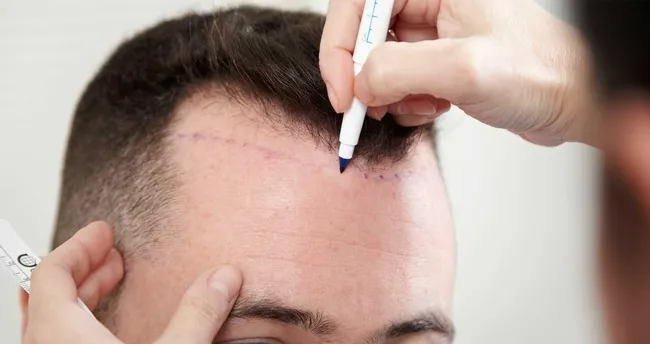
Hair transplants are often marketed with confident language, dramatic before-and-after images, and timelines that make the process look straightforward. That presentation can leave many people with the same, very human question: Is hair transplant 100% successful? It’s an understandable thing to ask—because this is a visible, personal decision, and most people want certainty before committing.
But hair restoration is still a medical procedure, and medicine rarely deals in absolutes. Success depends on variables that can’t be fully controlled, including your biology, your hair loss pattern, surgical planning, and how the scalp heals. So the most honest, patient-safe answer is: no hair transplant can be promised as 100% successful for every person in every situation—and any clinic presenting it that way is oversimplifying a complex process.
Is hair transplant 100% successful?
No. A hair transplant is not 100% successful in the sense of guaranteeing a specific density, growth rate, or cosmetic outcome for everyone. Many patients achieve meaningful, natural-looking improvements, but “success” is not a single number. It typically includes several outcomes at once: graft survival, natural design, even growth, donor-area preservation, and a result that continues to look balanced as you age.
A more realistic way to think about success is this: hair transplant success is a probability shaped by planning and patient factors, not a fixed promise. That probability can be high in well-selected candidates treated by experienced medical teams with strong protocols, but it is never absolute. Even when everything is done correctly, the body’s healing response and the progression of future hair loss can change what the final outcome looks like.
What “Success” Really Means in Hair Transplant Terms
When people ask if a hair transplant is 100% successful, they often mean one of these things:
- Will every graft grow?
- Will it look natural?
- Will it last forever?
- Will I get the exact density I want?
- Will I avoid any complications?
Each of these has a different answer, and that’s why “100% successful” is the wrong frame.
Graft survival is not an all-or-nothing outcome
Grafts are living follicles. After transplanting, they rely on blood supply, careful handling, placement technique, and the body’s healing. Even in excellent circumstances, it is not realistic to assume every single graft behaves identically. Some may grow later, some may grow finer, and some may not grow as expected. That doesn’t automatically mean the procedure “failed,” but it shows why a 100% claim is not medically responsible.
Natural appearance depends on design and execution
A transplant can be technically competent yet still look unnatural if the hairline is drawn too low, too straight, or too dense for the patient’s age and facial structure. Naturalness also depends on direction, angle, and placement. A clinic that emphasizes conservative design and explains limitations tends to deliver results that age better—because they’re planned to remain believable even if further thinning occurs.
Longevity depends on what happens to native hair
Transplanted hair is often taken from a more resistant donor zone, which can make it long-lasting for many people. But it doesn’t freeze your overall hair loss process. If native hair continues to thin behind the transplanted zone, the “successful” hairline can start to look isolated unless the overall plan accounted for future progression. This is why long-term strategy matters just as much as the procedure day.
Why Hair Transplants Don’t Come With Guarantees
The reason you can’t get a true 100% guarantee is not because the procedure is inherently unreliable; it’s because multiple variables remain outside anyone’s control. A responsible clinic will explain these variables instead of glossing over them.
Individual biology and healing response
Two patients can have similar hair loss patterns and still heal differently. Factors like scalp blood supply, inflammation, scarring tendency, smoking status, and underlying medical conditions can influence recovery and growth patterns. Even stress and sleep can affect how patients experience the early phases of healing, which shapes satisfaction.
Hair characteristics and contrast
Hair thickness (caliber), curl pattern, and the contrast between hair and scalp make a major difference in perceived density. Someone with thicker, wavy hair and low contrast can look “fuller” at a lower graft density than someone with fine, straight hair and high contrast. This is a key reason why “success” can’t be defined the same way for everyone.
Procedure planning and donor limitations
Donor hair is finite. A clinic can’t safely harvest unlimited grafts, and the distribution plan matters. If a patient has extensive thinning—especially in the mid-scalp and crown—no plan can always deliver dense coverage everywhere without risking donor overuse. “100% success” language can push unrealistic density expectations that don’t match donor reality.
Ongoing hair loss progression
A transplant can restore hair where it’s placed, but it doesn’t guarantee what happens to other areas over time. Many people who are satisfied after one procedure remain satisfied for years, but some choose additional work later because hair loss progresses behind transplanted areas. That isn’t necessarily “unsuccessful”—it can be a normal part of managing a progressive condition.
The Most Common Reasons People Feel a Transplant “Didn’t Work”
When people search “Is hair transplant 100% successful?” they are often worried about stories of disappointing outcomes. It helps to understand the most common drivers of dissatisfaction—many of which are preventable with better planning and clearer expectations.
Unrealistic expectations about density
A transplant is often about improved framing, coverage, and a natural hairline—not about recreating teenage density across the entire scalp. Patients who expect maximum density everywhere may feel disappointed even when grafts grow as planned. The most trusted clinics focus on natural-looking distribution and age-appropriate design.
Underestimating the timeline
Hair restoration takes time. Early shedding can happen, and visible growth is gradual. Many people experience an anxious “in-between” period. Clinics that provide good aftercare education and check-ins help patients interpret the process more accurately, which improves satisfaction.
Overharvesting or weak donor planning
If donor management is poor, patients can be unhappy with the back or sides of the scalp—especially if they later prefer shorter haircuts. Good donor planning prioritizes preservation, because future needs and preferences can change.
Continued thinning of native hair
A hairline can look strong while the mid-scalp thins over time. Without a long-term strategy, this can create contrast. This is why some people benefit from maintenance planning and periodic reassessment rather than assuming one session ends the story.
Technique and quality-control issues
Hair transplants are detail-dependent. Graft handling, time out of the body, placement angles, and intraoperative hydration can all matter. Quality control is not glamorous, but it’s one of the biggest contributors to predictable outcomes.
How to Improve the Odds of a “Successful” Result
While hair transplant success cannot be promised at 100%, patients can significantly improve their chances of a good outcome by making decisions that reduce avoidable risks. This is where “success” becomes practical: you’re not chasing a guarantee—you’re building a favorable setup.
Here is the single bullet list in this article, focusing on actions that typically improve long-term satisfaction:
- Choose a clinic that explains donor limits and builds a long-term plan, not just a one-day procedure
- Prioritize conservative, age-appropriate hairline design over aggressive, ultra-low hairlines
- Ask who performs each step and how medical oversight is handled on procedure day
- Follow aftercare instructions carefully, especially in the first 10–14 days
- Discuss ongoing hair loss management with a qualified clinician if continued thinning is likely
- Avoid clinics that promise identical outcomes for everyone or guarantee density without examining your case
These steps don’t “ensure” success, but they reduce the chance of preventable disappointment and make the process more predictable.
What to Ask in a Consultation If You Want a Straight Answer
If you’re worried about whether a transplant is 100% successful, your consultation questions should be designed to reveal how the clinic thinks. A trustworthy provider will answer in probabilities, trade-offs, and planning logic—rather than in slogans.
Ask how your hair loss pattern may progress and how the plan protects you if it does. Ask what part of the scalp will be prioritized, and why. Ask how the donor zone will be managed to keep it looking natural long-term. Ask what the clinic considers a “good” result for someone with your hair caliber and scalp contrast, and how they measure whether you’re tracking normally through recovery.
Also ask about the “what if” scenarios: what happens if growth is slower than expected, if redness lasts longer, or if you’re unhappy with density in a specific area. Clinics that can outline a clear follow-up pathway—without implying guaranteed outcomes—are usually more accountable.
Finally, pay attention to language. If you hear absolute claims that dismiss variability, that’s not confidence; it’s overselling. A medically grounded consultation should feel transparent and calm, not promotional.